
COMMERCIAL FOOD WASTE RECYCLING IN MARYLAND: REDUCE COSTS & MEET COMPLIANCE
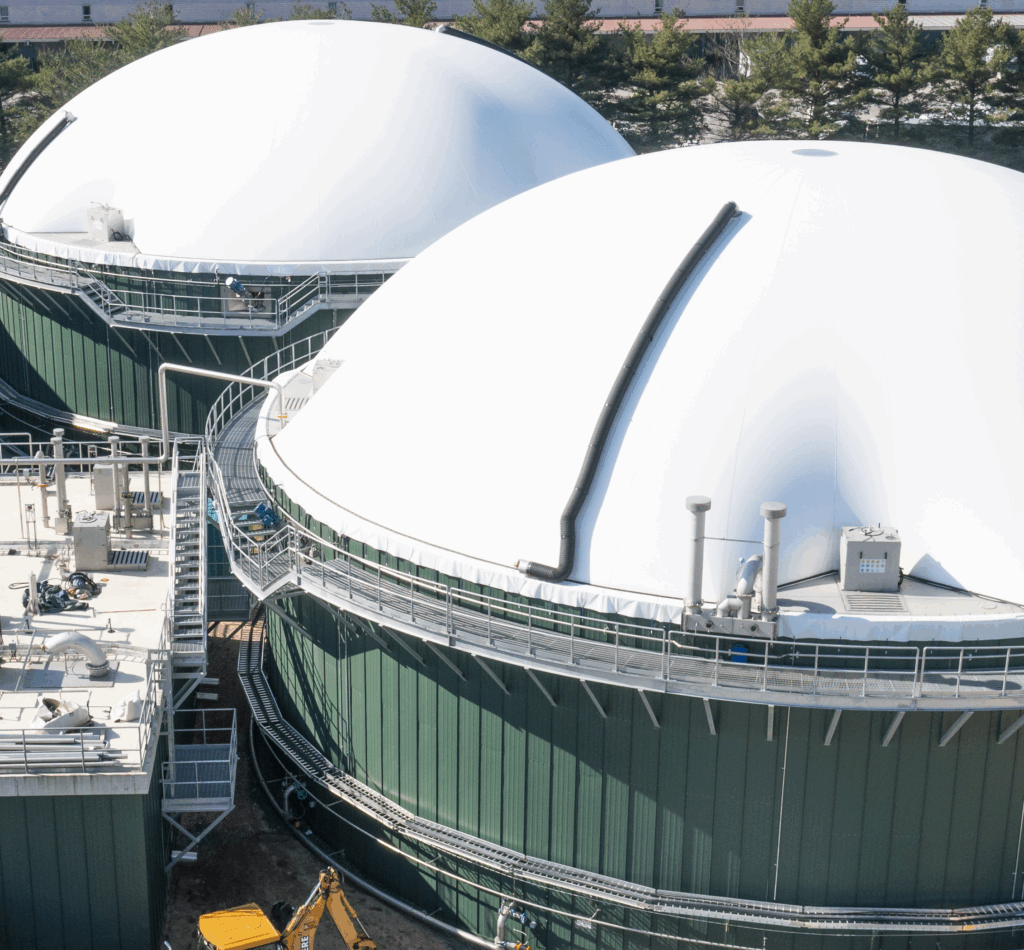
BTS Bioenergy provides commercial food waste recycling services in Maryland through anaerobic digestion at the Maryland Bioenergy Center in Jessup and Maryland Organics Recovery Center in Halethorpe. We process 110,000+ tons annually of bakery waste, produce waste, packaged foods, and food manufacturing byproducts, converting organic waste into renewable natural gas while meeting Maryland's mandatory diversion requirements.
BTS Bioenergy’s Maryland facilities process 110,000+ tons of organic waste annually, diverting 2,310 garbage trucks from landfills in 2024 alone. Our anaerobic digestion technology delivers emissions reductions equivalent to taking 10,674 cars off the road while converting your waste into pipeline-quality renewable natural gas. With 24/7 operations and depalletizing services, we serve food businesses within 150 miles of central Maryland.
The Hidden Cost Crisis in Maryland Food Waste Disposal
Traditional landfill disposal in the Northeast region averages over $80 per ton, the highest in the nation, with additional transportation and handling costs¹.
Meanwhile, Maryland law now requires businesses generating one ton or more of organic waste weekly to divert from landfills if located within 30 miles of an organics recycling facility².
Washington DC has even stricter requirements at 0.25 tons weekly.
While your competitors continue paying premium landfill rates, forward-thinking companies are discovering a cost-competitive path that also generates renewable energy and meets all compliance requirements.

Turn Your Waste Challenge Into Opportunity
Get your free waste assessment and custom quote within 48 hours
Maryland's Complete Organic Waste Processing System
BTS Bioenergy operates the only integrated organic waste processing system in Maryland, transforming what used to be your disposal cost into renewable energy.
Understanding Food Waste Recycling in Maryland
**Anaerobic Digestion** is a natural biological process that has been used for over a century to break down organic materials without oxygen. Microorganisms decompose food waste inside enclosed tanks, producing renewable natural gas and nutrient-rich digestate without burning or harmful emissions.
**Renewable Natural Gas (RNG)** is biomethane produced from organic waste through anaerobic digestion that is upgraded to pipeline-quality standards. RNG is chemically identical to fossil natural gas but is carbon-negative because it captures methane that would otherwise escape from decomposing waste.
**Certificate of Destruction** is legal documentation proving that recalled, expired, or surplus food products have been permanently destroyed and will not re-enter the supply chain. Maryland businesses require this documentation for compliance, liability protection, and regulatory reporting.
**Food Waste Diversion** refers to Maryland’s legal requirement that businesses generating one ton or more of organic waste weekly must divert materials from landfills to approved recycling facilities if located within 30 miles of such facilities.
**Depalletizing** is the industrial process of removing food products from pallets and packaging before processing. BTS Bioenergy’s depalletizing center handles packaged and palletized food waste, eliminating the need for businesses to unwrap products before disposal.

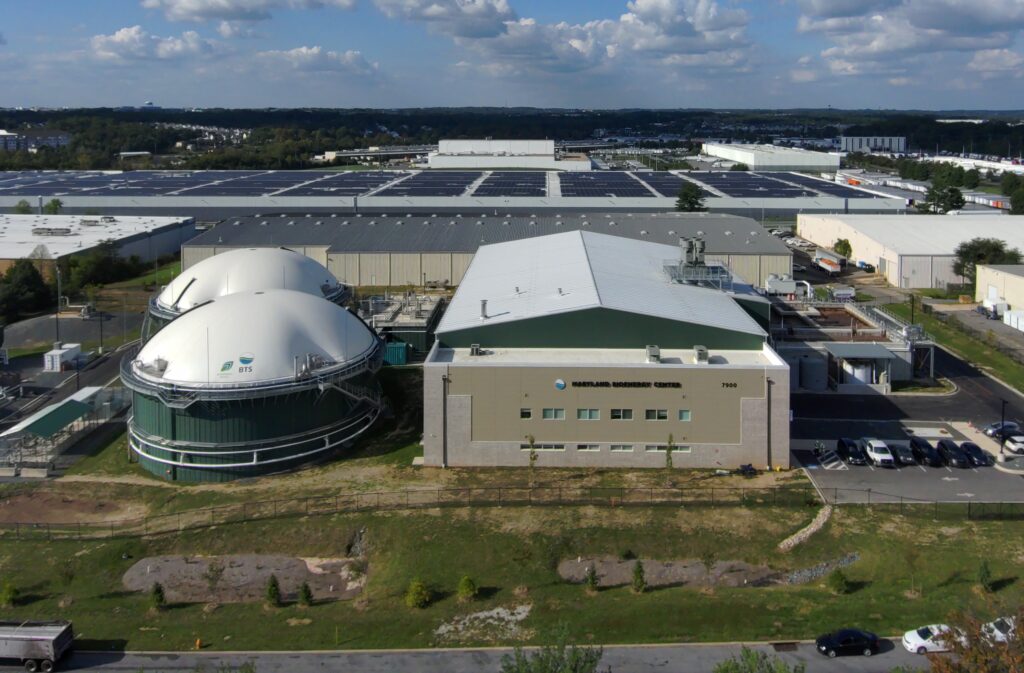
- Specializing in packaged and palletized food waste recycling
- Certificate of destruction documentation
- Maryland’s first large-scale anaerobic digestion facility
- Processes 110,000+ tons annually
- Generates renewable natural gas for pipeline injection
- Creates nutrient-rich digestate for agricultural use
What We Accept & Current High-Demand Materials
All Accepted Organic Materials:
- Food scraps and food processing waste
- Expired food recycling needs
- Food manufacturing waste management
- Commercial kitchen waste
- Restaurant food waste streams
- Produce waste disposal
- Institutional food waste from cafeterias
- Grease trap waste and commercial grease disposal
- Packaged and palletized food waste
Currently High-Demand Materials:
- Bakery waste disposal
- Mixed grocery waste
- Bulk food waste services
- Sugar processing waste
- Food processing residuals
Frequently Asked Questions
What types of organic waste can you process?
How quickly can service begin?
What compliant docs are provided?
Is there a minimum tonnage?
How does pricing work?
Real Transformation Stories
Case Study: Mid-Size Food Distributor
- Old Reality: Rising disposal costs, compliance headaches, pest issues, time-consuming waste logistics
- New Reality: Significant cost reductions compared to $80+ landfill rates, complete compliance documentation, eliminated pest problems, 30% less waste management time
- Bonus Benefits: Enhanced sustainability reporting that customers love, predictable monthly costs, emergency service availability
Case Study: Commercial Bakery
- Challenge: Large volumes of bakery waste, strict compliance requirements
- Solution: Reliable processing through BTS anaerobic digestion
- Results: Streamlined operations, consistent service, contributing to renewable energy generation
MARYLAND BUSINESSES ARE MAKING THE CHANGE
Emergency Product Recalls & Surplus Disposal - From quote to pickup in 24-48 hours
The Science Made Simple: How Food Waste Becomes Renewable Energy

You don’t need a PhD to understand what happens at our Maryland facilities, but the process is genuinely fascinating:
Anaerobic Digestion (AD) is a time-tested, natural process that has been used for over a century to break down organic materials. This process relies on microorganisms to decompose waste in the absence of oxygen.
AD takes place in fully enclosed, cylindrical tanks where organic materials undergo fermentation. Unlike combustion, this process does not involve burning or produce harmful emissions, making it an environmentally friendly solution. Inside the tanks, microbes break down the material and release gas, which is safely captured and collected Anaerobic Digestion Technology | BTS Bioenergy.
What Makes BTS Different: At BTS Bioenergy, our cutting-edge microbiology laboratory, decades of expertise in processing various organic materials, and proprietary microbial nutrients set us apart as industry leaders. Our METALab conducts over 170,000 analyses annually to ensure consistent performance.
We Produce Two Valuable Products:
- Renewable Energy: The gas produced during AD is a renewable energy source that can be used for heating and electricity because we upgrade it to pipeline-quality renewable natural gas
- Soil Amendment: The remaining byproduct, known as “digestate,” serves as a nutrient-rich organic soil amendment.
The entire process cuts your waste disposal cost and transforms it into renewable energy flowing into Maryland’s grid, while valuable nutrients support local agriculture – all backed by over 25 years of proven expertise.
Cost Comparison
What you're really paying for
Processing Method | Cost Range | Compliance Status | Environmental Impact | Additional Value |
Landfilling | $85-125/ton+ | Non-compliant in MD | High methane emissions | None |
Traditional Composting | $50-90/ton | Compliant | Weather-dependent | Soil amendment only |
BTS Anaerobic Digestion | $60-90/ton* | Fully compliant | Net environmental benefit | Renewable energy + complete documentation |
*Pricing varies based on material composition, volume, contract terms, and logistics
Making the Switch Is Simple
BTS has streamlined everything for smooth transitions. We respond to inquiries within 48 hours, complete assessments within a week, integrate pickup schedules with your operations, and provide ongoing partnership with documentation.
Ready to Transform Your Waste Costs?
Maryland businesses generating organic waste are discovering how we turn disposal expenses into renewable energy while meeting compliance requirements. The companies making this switch now, position themselves ahead of rising costs and tightening regulations.
Contact BTS Bioenergy
for your free waste assessment and discover how much you could save.
Serving businesses within 150 miles of central Maryland with Maryland’s fastest response times.