
How Commercial Food Waste Recycling Works in Maryland
Commercial food waste recycling gives businesses an alternative to landfill disposal for approved organic materials. Through anaerobic digestion, food manufacturing residuals, bulk liquid food waste and other suitable organics are converted into renewable natural gas (RNG). For businesses in Maryland and the Mid-Atlantic, getting started means identifying your waste stream, confirming facility acceptance and arranging transportation and scheduled delivery.
What Food Waste Can Businesses Recycle?
Food manufacturing and processing operations generate recyclable organic materials such as off-spec beverages, surplus ingredients, bakery waste, produce, dairy residuals, and fats, oils and grease (FOG).
Acceptance depends on the receiving facility’s requirements. Identify each material’s source, estimated quantity and any packaging or contamination before requesting approval.
How Do Businesses Arrange Food Waste Recyling?
Start by documenting your material type, location, estimated tons or gallons per load and disposal frequency. Share these details with the receiving facility to discuss acceptance, pricing and transportation requirements.
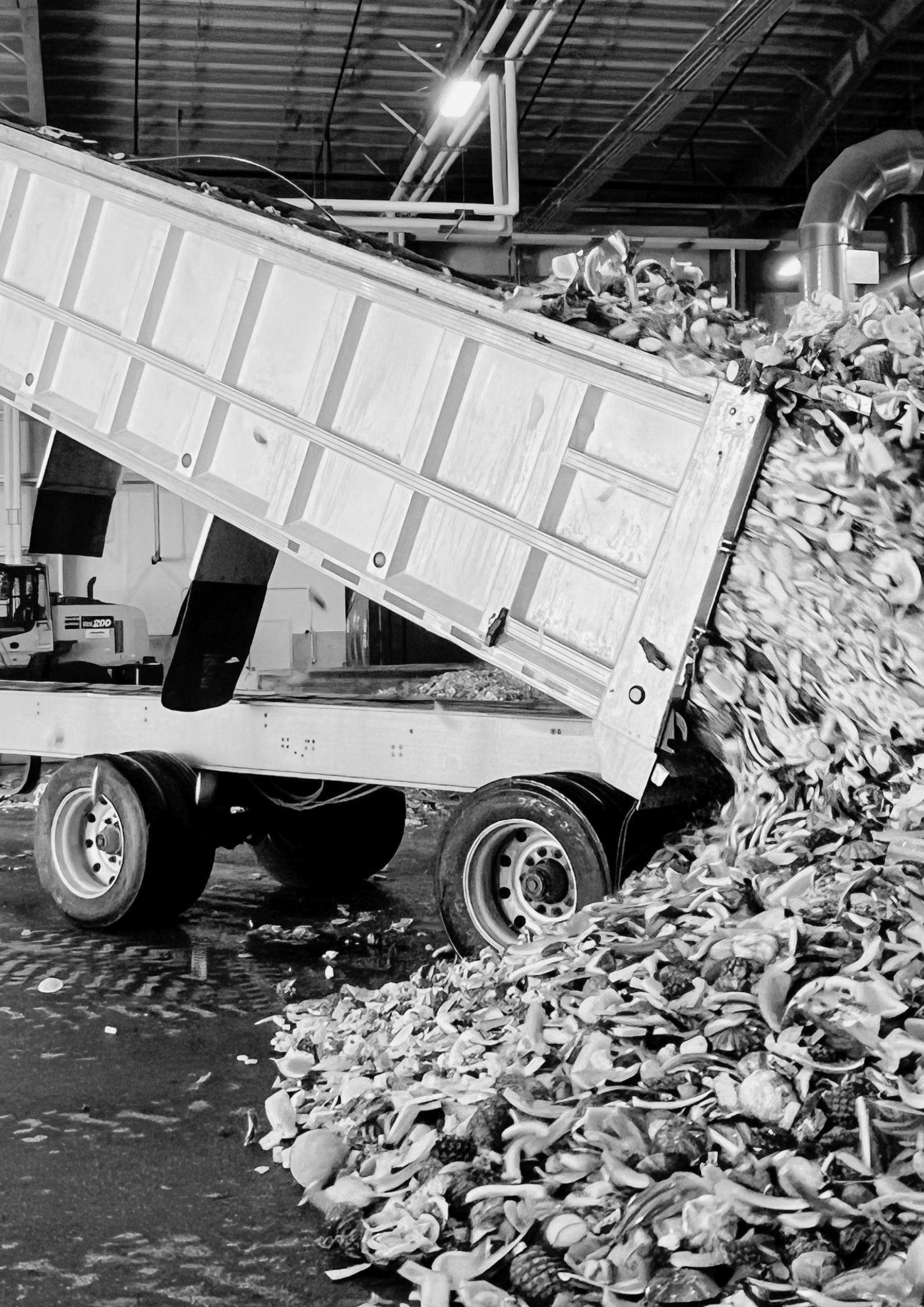
At Maryland Bioenergy Center, approved bulk liquids arrive by tanker truck and loose solid food waste arrives in bulk truckloads. All deliveries must be scheduled with the facility.
What Should Businesses Look for in a Food Waste Recycling Facility?
Material Compatibility: Confirm that the facility accepts your specific food waste, including any packaging or contamination.
Volume Requirements: Check whether your quantities and disposal frequency match the facility’s receiving capabilities.
Transportation: Determine how materials will be stored, collected and delivered.
Delivery Scheduling: Confirm receiving hours and arrange deliveries before dispatching loads.
Documentation: Discuss the records needed for internal reporting or applicable diversion requirements.
Total Cost: Compare processing fees, transportation and handling costs with your current disposal arrangements.
Where Can Businesses Recycle Food Waste in Maryland?
The Maryland Bioenergy Center in Jessup provides a recycling outlet for approved bulk liquid food waste and loose, source-separated solid food waste from commercial generators and haulers.
Materials are reviewed for acceptance before delivery. Businesses can submit their waste details to discuss pricing, transportation requirements and scheduling.
How Does Anaerobic Digestion Recycle Food Waste?
Anaerobic digestion uses microorganisms to break down organic materials in enclosed tanks without oxygen. The resulting gas is captured and upgraded into renewable natural gas (RNG) for pipeline injection. The process also produces a nutrient-rich soil amendment.
Explore our anaerobic digestion technology to see how the process works.
Maryland Bioenergy Center at a Glance
- Location
- Jessup, Maryland 7900 Oceano Ave, Jessup, MD 20794
- Annual Processing Capacity
- 110,000 tons Commercial organic materials
- Service Area
- Approximately 150 miles From Jessup, Maryland
Ready to Explore Food Waste Recycling for Your Business?
Have your material type, estimated quantity, location and disposal frequency ready. Visit the Maryland Bioenergy Center page to review delivery requirements and request pricing for your waste stream.